


When chronic pain is difficult to explain, it can be worth looking beyond the pain itself and considering the bigger picture.
- Are you unusually flexible?
- Do some of your joints move beyond what seems normal — even if it’s only one area, such as your knees?
- Do you frequently sprain, strain or injure yourself?
- Do you experience a combination of chronic pain, fatigue, migraines or digestive problems?
For some people, these symptoms may not be completely unrelated. They can sometimes occur as part of a broader pattern associated with hypermobile Ehlers-Danlos Syndrome (hEDS) or a Hypermobility Spectrum Disorder (HSD).
Ehlers-Danlos syndromes are a group of inherited connective tissue disorders that can affect many different parts of the body. While joint hypermobility is one of the features commonly associated with EDS, these conditions can involve much more than simply being “double-jointed” or flexible.
An important point to understand is that joint hypermobility does not necessarily mean feeling flexible or loose throughout the body. In fact, some people with hEDS or HSD experience significant muscle tightness, stiffness and a feeling of restricted movement. When muscles work harder to provide stability around hypermobile joints, they may remain tense or become overworked, which can contribute to persistent muscle and fascial tightness.
Chronic pain, fatigue, headaches and migraines, gastrointestinal symptoms and autonomic symptoms such as dizziness or difficulty tolerating prolonged standing can all occur alongside hEDS.
For someone who has lived with this collection of seemingly unrelated symptoms for years, recognising this broader pattern may provide an important piece of the puzzle.
What is Ehlers-Danlos Syndrome?
Ehlers-Danlos syndromes (EDS) are a group of 13 recognised heritable connective tissue disorders.
Connective tissue provides structure, strength and support throughout the body. It is found in the skin, joints, ligaments, blood vessels and many internal organs.
The different types of EDS have different genetic causes and clinical features.
The most common form is hypermobile Ehlers-Danlos syndrome (hEDS), which is particularly associated with generalised joint hypermobility, joint instability and chronic musculoskeletal pain.
Other forms of EDS can have very different characteristics. For example, classical EDS is associated with significant skin hyperextensibility and characteristic scarring, whilst vascular EDS is associated with fragility of blood vessels and certain internal organs and requires specialist medical management.
Not everyone with EDS experiences the same symptoms, and the severity and combination of symptoms can vary considerably between individuals.
Could You Have Hypermobile Ehlers-Danlos Syndrome?
You may have heard of EDS because of joint hypermobility, but hEDS is a multisystem condition and symptoms can extend well beyond the joints.
Some people spend years being told that their symptoms are unrelated or that they are simply “very flexible”, without realising that their hypermobility may be part of a broader pattern.
Symptoms that can occur with hEDS or HSD include:
- Unusually flexible joints
- Joint instability or joints that “give way”
- Recurrent sprains or injuries
- Subluxations or dislocations
- Chronic muscle and joint pain
- Neck and back pain
- Persistent muscle tension
- Fatigue and reduced exercise tolerance
- Headaches or migraines
- Digestive symptoms such as reflux, bloating, constipation or diarrhoea
- Dizziness or light-headedness, particularly when standing
- Palpitations or exercise intolerance
- Sleep disturbance
Having some of these symptoms does not mean that you have EDS. However, when several occur together, particularly alongside significant joint hypermobility, it may be worth discussing your symptoms with your GP or another appropriately qualified healthcare professional.
What is Hypermobile Ehlers-Danlos Syndrome (hEDS)?
There are 13 recognised types of EDS, and most have an identified genetic cause. Hypermobile Ehlers-Danlos syndrome is different.
At present, there is no specific genetic test that can confirm hEDS. The underlying genetic cause has not yet been identified, despite ongoing research.
As a result, hEDS is diagnosed clinically. Assessment involves looking at joint hypermobility and other characteristic features, taking a detailed personal and family history, and excluding other conditions that could explain the symptoms.
Some people have symptomatic joint hypermobility but do not meet the diagnostic criteria for hEDS. They may instead be diagnosed with hypermobility spectrum disorder (HSD). Both hEDS and HSD can be associated with significant symptoms, including chronic pain.
Why Can Ehlers-Danlos Syndrome Cause Chronic Pain?
Chronic pain is one of the most significant symptoms experienced by many people with hEDS.
Pain can occur in the joints, muscles, tendons and ligaments and may be associated with joint instability, recurrent injuries and the increased muscular effort required to stabilise hypermobile joints.
For example, when a joint is less stable, surrounding muscles may need to work harder to provide stability and maintain posture. Over time, this can contribute to muscle tension, fatigue and pain.
Subluxations, where a joint partially moves out of its normal position, and dislocations may also occur more readily in some people with significant joint instability.
However, chronic pain in hEDS is not always simply a matter of mechanical joint problems.
For some people, pain can become more widespread over time and involve changes in pain processing and nervous-system sensitivity. This is one reason why chronic pain conditions such as fibromyalgia can overlap with hypermobility disorders.
The result can be a complex combination of mechanical pain, muscular pain, nerve sensitivity and altered pain processing.
Why Can Sitting and Standing Be So Exhausting?
One aspect of hypermobility that is sometimes overlooked is the effort involved in simply maintaining posture. If joints are less stable, muscles may need to work harder to keep the body upright and maintain joint position. For some people, prolonged standing or sitting can therefore be surprisingly tiring or uncomfortable.
This may contribute to:
- Muscle fatigue
- Neck and shoulder tension
- Back pain
- Hip discomfort
- Headaches
- Reduced tolerance for exercise or prolonged activity
- This can also create a difficult cycle whereby pain leads to reduced activity, reduced activity contributes to deconditioning, and the person becomes less able to tolerate physical activity.
Appropriate strength and stability training can therefore be an important part of hEDS management.
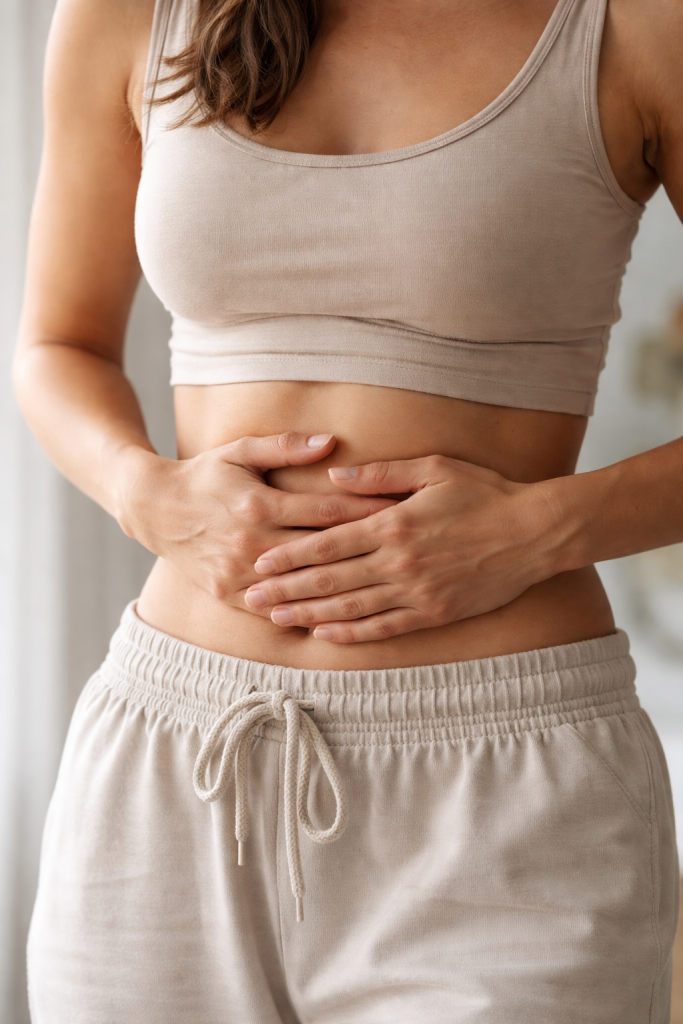
Ehlers-Danlos Syndrome and Digestive Problems
Digestive symptoms are commonly reported by people with hEDS and HSD. These may include:
- Reflux and heartburn
- Abdominal pain
- Bloating
- Nausea
- Feeling unusually full after eating
- Constipation &/or diarrhoea
- Altered gastrointestinal motility
Because connective tissue is found throughout the gastrointestinal tract, changes associated with hEDS may potentially influence how the gut functions. Altered tissue elasticity and the way the gut responds to stretching have been proposed as possible contributors to symptoms.
However, gastrointestinal symptoms in hEDS are likely to have multiple contributing factors, including autonomic dysfunction and changes in gut-brain interaction.
Some people also develop increasingly restrictive diets because they find that particular foods aggravate their symptoms. However, unnecessarily restrictive diets can increase the risk of nutritional deficiencies and should be approached carefully.
EDS, POTS and Autonomic Symptoms
Some people with hEDS or HSD experience symptoms associated with autonomic dysfunction, including:
- Dizziness or light-headedness
- Feeling faint when standing up
- Palpitations
- Exercise intolerance
- Difficulty regulating body temperature
- Fatigue
One condition that can occur alongside hEDS is postural orthostatic tachycardia syndrome (POTS).
POTS is a form of autonomic dysfunction in which standing can produce an excessive increase in heart rate along with symptoms such as dizziness, palpitations, fatigue and exercise intolerance.
The relationship between hEDS and POTS is an area of ongoing research. The underlying mechanisms are not fully understood and may involve several factors, including connective tissue, blood-volume regulation and autonomic nervous-system function.
If you experience significant dizziness, fainting, palpitations or other cardiovascular symptoms, appropriate medical assessment is important.
Mast Cells and EDS
You may have heard about a possible connection between hEDS, HSD and mast cell activation.
Mast cells are immune cells involved in allergic and inflammatory responses. Some people with hEDS or HSD report symptoms such as flushing, itching, hives, digestive symptoms or unusual reactions to foods or medications, which can lead to questions about mast cell involvement.
The relationship between hEDS/HSD and mast cell activation is still being researched. Having hEDS or HSD does not automatically mean you have mast cell activation syndrome (MCAS), and testing is generally considered when a person’s symptoms are suggestive of a systemic mast-cell disorder rather than simply because they are hypermobile.
EDS, Headaches and Migraines
Headaches and migraines are frequently reported by people with hEDS and HSD. There may be several contributing factors, depending on the individual.
For example, neck and upper-body muscle tension associated with joint instability may contribute to some headaches. Temporomandibular joint (TMJ) problems may also play a role for some people.
Other factors such as sleep disturbance, autonomic symptoms, stress, hormonal changes and mast cell involvement may also contribute.
This is another example of why a person’s symptoms are best considered as a whole picture rather than as isolated conditions.

How is Ehlers-Danlos Syndrome Diagnosed?
If you suspect that you may have hEDS, diagnosis should be undertaken by a medical specialist. There is currently no genetic test that can confirm hypermobile EDS (hEDS).
Diagnosis for hEDS involves a clinical assessment that considers:
- Generalised joint hypermobility
- Other characteristic physical features
- Personal medical history
- Family history
- Joint instability and musculoskeletal symptoms
- Exclusion of other possible explanations for the symptoms
Other types of EDS and connective tissue, rheumatological or genetic conditions may require genetic testing or specialist assessment.
If you have unexplained chronic pain alongside significant hypermobility, discussing your symptoms with your GP may be a useful starting point.

How Can Naturopathy Support Someone With EDS?
Naturopathy cannot correct the underlying connective tissue changes associated with EDS.
However, individualised naturopathic care may provide supportive management for some of the symptoms and health factors that can influence your overall condition.
Depending on your individual presentation, this may include looking at aspects including:
- Pain management support through herbal and nutritional medicine
- Optimising digestive health & gut microbiome diversity
- Addressing vitamin and mineral deficiencies
- Reducing fatigue levels through targeted nutritional support
- Assessment for food intolerances
- Optimising sleep quality
- Stress management strategies
- Assessing relevant pathology and considering functional testing referral where appropriate
Your treatment plan would be tailored to your individual symptoms, health history, medications and existing medical care.
Frequently Asked Questions
Is Ehlers-Danlos Syndrome a cause of chronic pain?
Chronic pain is common in hEDS and can have several contributing factors, including joint instability, recurrent injuries, muscular compensation and changes in pain processing.
Is there a test for hypermobile Ehlers-Danlos Syndrome (hEDS)?
There is currently no genetic or laboratory test that can confirm hEDS. Diagnosis is made clinically by a medical specialist using established diagnostic criteria and by excluding other conditions that may cause similar symptoms.
Do people with EDS also frequently have digestive problems?
Yes – Gastrointestinal symptoms are commonly reported in people with hEDS and HSD. These can include reflux, abdominal pain, bloating, nausea, constipation, diarrhoea and altered gastrointestinal motility.
Can EDS cause migraines?
Headaches and migraines are frequently reported in people with hEDS and HSD. There can be multiple contributing factors, including neck and jaw symptoms, autonomic dysfunction, sleep, electrolyte imbalance and other individual migraine triggers.
Is EDS associated with POTS?
POTS and other forms of orthostatic intolerance are reported more frequently in people with hEDS/HSD than in the general population. However, not everyone with EDS has POTS, and diagnosis requires appropriate medical assessment.
Is EDS associated with MCAS?
There is ongoing research into the relationship between hEDS, autonomic dysfunction and mast-cell-related symptoms. However, having hEDS does not automatically mean that someone has MCAS, and suspected MCAS should be assessed using appropriate diagnostic criteria.
Can naturopathy treat Ehlers-Danlos Syndrome?
There is currently no naturopathic treatment that can reverse the underlying connective tissue changes associated with EDS. Naturopathic care may instead provide supportive management for individual symptoms and health factors such as nutritional inadequacy, digestive health, fatigue, sleep and aspects of chronic pain management.
Should people with EDS exercise?
Appropriate physical activity is generally an important part of managing hEDS and HSD. Strength and stability exercises can help support joint function, but exercise programs should be individualised, particularly where there is significant joint instability or pain.
Specialist Naturopath for Chronic Pain
Appointments are available:
- Online Australia-wide
- In-person in Lennox Head, NSW

This article is for general educational purposes and is not intended to diagnose or treat Ehlers-Danlos Syndrome. If you have persistent, severe or unexplained symptoms, please speak with your GP or an appropriately qualified healthcare professional.

Could Ehlers-Danlos Syndrome Be Behind Your Chronic Pain?
When chronic pain is difficult to explain, it can be worth looking beyond the pain itself and considering the bigger picture. Are you unusually flexible? Do some of your joints move beyond what seems normal — even if it’s only one area, such as your knees? Do you frequently sprain, strain or injure yourself? Do
Could Your Breast Implants Be Making You Sick?
Breast implants have been marketed for decades as a safe and long-lasting cosmetic procedure. However, many women around the world report developing a cluster of chronic and often debilitating symptoms after receiving implants. This collection of symptoms has become known as Breast Implant Illness (BII). Although BII is not yet formally recognised by all medical
Histamine Intolerance – what is it and how can we treat it?
Most people associate histamine with seasonal allergies like runny noses, itchy eyes, and skin rashes. But this powerful molecule plays a much larger role in the body. Histamine is also involved in brain function, gastric acid secretion, immune signalling, and reproductive health. For some, however, histamine becomes a problem because the body can’t break it
Healing Acne Naturally: How Gut Health, Hormones, and Diet Impact Your Skin
When patients come to see me for acne, I often feel a deep connection because I’ve been there too. I vividly remember my own acne journey during my teens and into my 20’s: the lack of self-esteem, the embarrassment, and the distress of waking up each morning to find new sore spots. Unless you’ve struggled
Fibromyalgia Flares – tips to manage them
Unfortunately, living with fibromyalgia often means dealing with pain flares from time to time. Flares can occur when there has been a period of stress, an injury, hormonal changes, poor sleep, a lot of extra demands being placed on you or not being able to follow your usual nutritional regimen amongst other reasons. The
Let’s Talk Perimenopause
Thankfully women and the health profession are talking about perimenopause more frequently now. In years gone by, menopause was a hush-hush subject, even amongst other women. And perimenopause got barely a mention at all. Now, women are rightfully demanding more attention be paid to the often debilitating symptoms they experience and they are seeking options